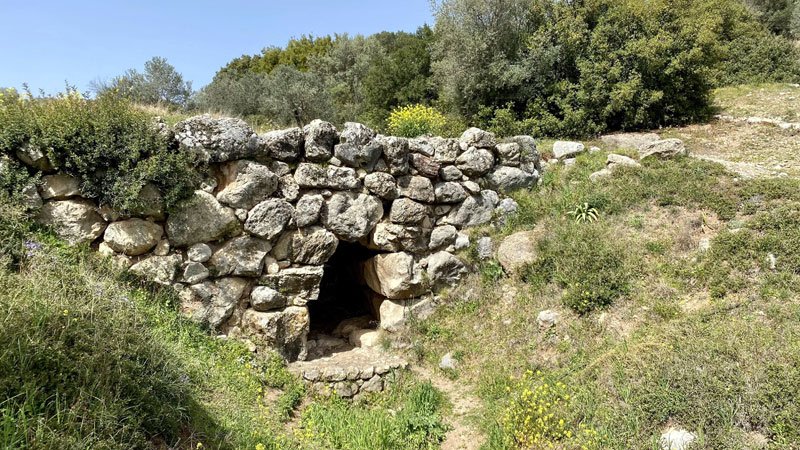
Nestled in the Peloponnese region of Greece, the Arkadiko Bridge—often called the Kazarma Bridge—stands as one of the most remarkable and enduring monuments of the Mycenaean civilization. Built during the Bronze Age, this bridge is not just an archaeological curiosity; it is a functioning testament to the sophisticated engineering prowess of a society that flourished over 3,300 years ago.
The Mycenaean civilization flourished from 1600 to 1100 BCE, known for its palaces, warrior-kings, and engineering achievements. During this period, an impressive road network was developed across the Peloponnese to link major cities such as Mycenae, Tiryns, Epidauros, and Thebes.
The Arkadiko Bridge was constructed around 1300 BCE, during the height of the Mycenaean era (c. 1600–1100 BCE). This period saw the development of powerful citadels like Mycenae, Tiryns, and Argos, all requiring advanced infrastructure to support their military and economic activities.
The bridge was a crucial component of a vast Mycenaean road network designed primarily for military purposes. This network connected the major Mycenaean centers, facilitating the rapid movement of troops, chariots, and supplies. The Arkadiko Bridge specifically lies on the ancient road between the two important Bronze Age cities of Tiryns (a major palatial centre) and Epidauros (renowned for its sanctuary).
The Arkadiko Bridge was part of this military and commercial highway, designed to:
Archaeologists believe the bridge was built around 1300 BCE, during the time when Mycenaean power was at its peak — the same era often associated with legends like King Agamemnon and the Trojan War.
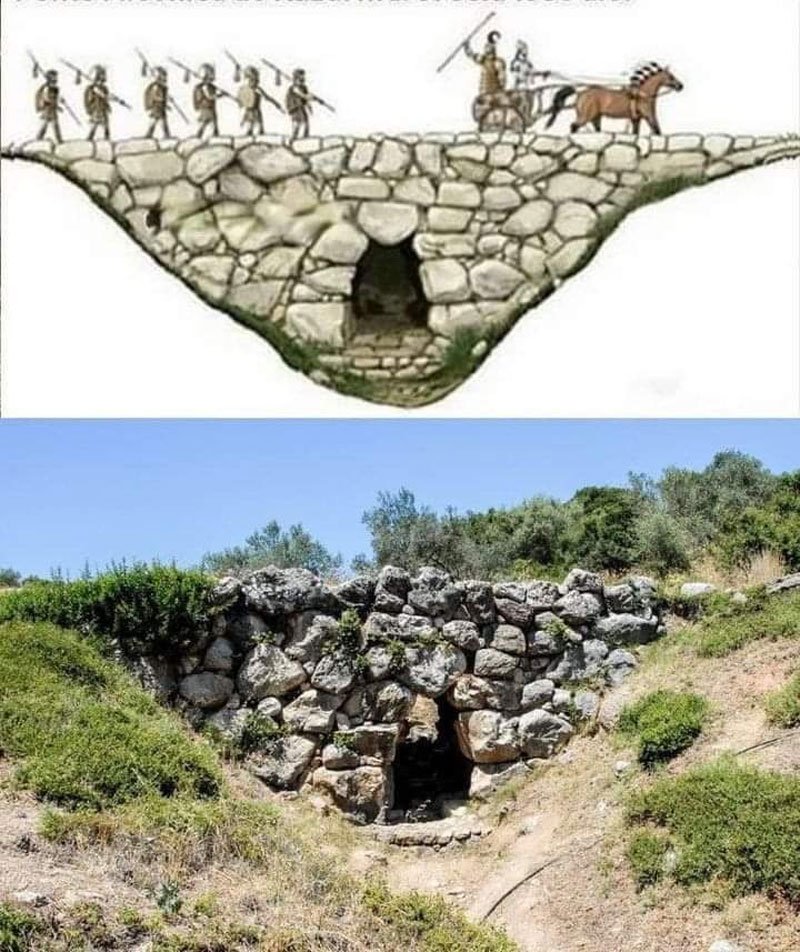
What distinguishes the Arkadiko Bridge is its method of construction, known as corbel arch construction or the cyclopean style, named because the immense size of the stones led later Greeks to believe only the mythical Cyclopes could have built them.
The Arkadiko Bridge demonstrates the brilliance of Mycenaean engineering:
Dry-Stone Construction
The bridge was built using large, unworked or minimally worked limestone blocks, fitted together meticulously without the use of mortar (dry-stone masonry). The stones are held in place purely by gravity and precision fitting. This technique, known as Cyclopean masonry, creates stability through the weight and interlocking of stones.
Corbel Arch Design
The bridge features a single, prominent arch—a simple but strong corbel arch. This design involves laying courses of stone slightly projecting over the course immediately below until the two sides meet at the top.
This type of structure was a hallmark of Mycenaean architecture, also seen in:
Dimensions
The road across the bridge was wide enough for horse-drawn chariots, showing its military purpose.
Purpose-Built
Its wide, flat surface was specifically designed to accommodate the width and weight of Mycenaean chariots, proving its strategic military importance.
The successful construction of the bridge demonstrates the Mycenaeans’ advanced understanding of civil engineering principles, hydraulics (to manage the flow of the stream), and the efficient organization of labour required for such a massive public works project.
The Arkadiko bridge was part of the ancient road from Tiryns to Epidauros, one of the best-preserved Mycenaean highways.
This road network is considered the oldest example of advanced road planning in Europe.
The bridge was not an isolated structure. Archaeologists have discovered:
This shows that the Mycenaeans built a complete transportation system — centuries before the Romans.
Although the bridge remained known to locals for centuries, it gained academic attention in the 19th and 20th centuries. Scholars were astonished that a Bronze Age structure was:
It soon became recognized as a rare and important example of prehistoric European engineering.
The most astonishing fact about the Arkadiko Bridge is its current operational status. For over three millennia, this structure has withstood earthquakes, erosion, and climate change, and remains entirely functional today.
Today, the Mycenaean Bridge of Arkadiko is:
The bridge remains fully intact, without major restoration. Its survival for over 3 millennia is a testament to Mycenaean craftsmanship.
Conservation Status
Despite its age, the bridge continues to stand proudly in its original form — a functional relic of a long-vanished civilization.
The bridge represents:
1. Engineering Genius
It proves that Bronze Age engineers had deep knowledge of weight distribution, stone cutting, and transportation planning.
2. Continuity of Civilization
It connects modern Greece with its ancient Mycenaean roots — a continuous thread of culture and innovation.
3. Global Architectural Heritage
As one of the world’s oldest still-used bridges, it offers a unique glimpse into early human infrastructure and technology.
4. A Symbol of Endurance
While empires rose and fell, this bridge remained — untouched and unbroken for over 3,200 years.
The Mycenaean Bridge of Arkadiko is more than just a relic; it is a living archaeological site that vividly illustrates the power, skill, and enduring legacy of the Mycenaean civilization, reminding the modern world of the sophisticated engineering feats achieved in deep antiquity.
It is more than a historical artifact — it is a masterpiece of ancient engineering that continues to serve the landscape it was built for. Standing in quiet dignity among olive groves and hills, it reminds us that human innovation has deep roots, and that even in the Bronze Age, people built structures meant to last forever.
A timeless symbol of Mycenaean ingenuity, the bridge remains one of Europe’s strongest links between past and present — a true marvel of ancient architecture that still carries the footsteps of travelers after more than three millennia.
Q. What is the primary name of the ancient structure?
A. The Arkadiko Bridge.
Q. What is the Arkadiko Bridge?
A. It is an ancient stone bridge built during the Mycenaean period in Greece.
Q. What is its common alternative name?
A. The Kazarma Bridge.
Q. In which region of Greece is the bridge located?
A. The Peloponnese region.
Q. The bridge was built during the peak of which major historical era?
A. The Bronze Age.
Q. What specific type of arch construction was used?
A. Corbel arch construction.
Q. What is the construction style often called due to the massive stone blocks?
A. Cyclopean style.
Q. Where is the Arkadiko Bridge located?
A. In the Peloponnese region of southern Greece, near the village of Arkadiko.
Q. When was the bridge built?
A. Around 1300 BCE, during the Late Bronze Age.
Q. Which civilization built the bridge?
A. The Mycenaean civilization.
Q. Why was the style named “Cyclopean”?
A. Later Greeks believed only the mythical Cyclopes could have built it.
Q. What was the bridge a crucial part of?
A. A vast Mycenaean road network.
Q. What was the primary purpose of this road network?
A. To facilitate military movement (troops, chariots, and supplies).
Q. Which two major Mycenaean centers did the road connect?
A. Tiryns and Epidauros.
Q. Why was the bridge constructed?
A. To connect major Mycenaean cities for trade, travel, and military movement.
Q. Which cities did it help connect?
A. It linked routes between Tiryns, Mycenae, and Epidauros.
Q. What type of bridge is Arkadiko?
A. A corbel arch bridge.
Q. What materials were used to build it?
A. Large limestone blocks.
Q. Was mortar used in its construction?
A. No, it was built using dry-stone (Cyclopean) masonry.
Q. How long is the Arkadiko Bridge?
A. Approximately 22 meters long.
Q. How wide is the bridge?
A. About 2.5 meters, wide enough for chariots.
Q. What kind of vehicles crossed it in ancient times?
A. Horse-drawn chariots and foot soldiers.
Q. Is the Arkadiko Bridge still standing today?
A. Yes, it is fully intact.
Q. Is the bridge still in use?
A. Yes, it can still be crossed on foot.
Q. Is it one of the oldest bridges in the world?
A. Yes, it is among the oldest surviving and usable bridges.
Q. Was mortar used to hold the stones together?
A. No; it was built using dry-stone masonry.
Q. How many prominent arches does the bridge feature?
A. A single arch.
Q. What kind of ancient vehicle was the bridge’s surface designed to accommodate?
A. Chariots.
Q. How old is the Arkadiko Bridge today?
A. Over 3,300 years old.
Q. What makes the bridge architecturally special?
A. Its durability and precise stone-fitting without cement.
Q. Are there other Mycenaean bridges nearby?
A. Yes, at least two more exist in the same area.
Q. Was the bridge part of a larger road system?
A. Yes, it was part of one of Europe’s earliest road networks.
Q. Who rediscovered its historical importance?
A. Modern archaeologists in the 19th–20th centuries.
Q. Is the bridge protected today?
A. Yes, it is a protected archaeological monument.
Q. Has the bridge been heavily restored?
A. No, it remains mostly in its original condition.
Q. What does the bridge tell us about Mycenaeans?
A. They were advanced engineers and planners.
Q. Why is the Arkadiko Bridge important today?
A. It connects modern society to Bronze Age engineering.
Q. What does the Arkadiko Bridge symbolize?
A. Human ingenuity, endurance, and timeless craftsmanship.
Q. What is the most astonishing fact about the bridge’s current status?
A. It is still fully functional and in use.
Q. What kind of traffic currently uses the bridge?
A. Local pedestrian and agricultural traffic.
Q. Why is the bridge historically significant globally?
A. It is one of the oldest continually used bridges in the world.
Q. The corbel arch design demonstrates an understanding of which principle?
A. Civil engineering and hydraulics.
Q. What is the technique of fitting stones precisely without mortar called?
A. Dry-stone masonry.
Q. What is the definition of a corbel arch?
A. Courses of stone that gradually project over the course below until they meet at the top.
Q. Has the bridge undergone major modern restoration?
A. No, a testament to the original Mycenaean quality.
Q. The bridge’s longevity proves the enduring legacy of which quality of the Mycenaeans?
A. Their sophisticated engineering prowess.